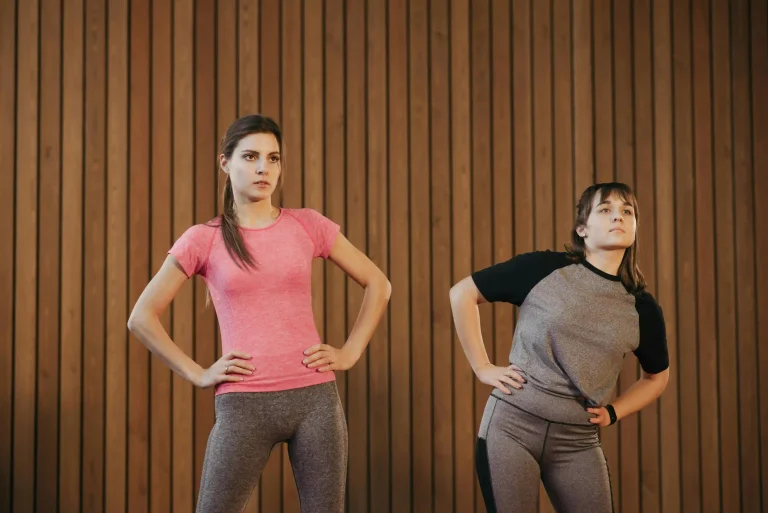

Free Weights: The Ultimate Guide to Dumbbells, Barbells, and More
Free weights are a cornerstone of any well-rounded fitness routine. Whether you’re a seasoned lifter or just beginning, incorporating free weights into your workouts can help you build strength, enhance muscle tone, and improve overall fitness. In this article, we’ll explore what free weights are, their benefits, and how to use them effectively in your training routine.
What Are Free Weights?
Free weights are portable, versatile pieces of gym equipment, such as dumbbells, barbells, kettlebells, and weight plates, that are not attached to any machines. They allow the user to perform exercises freely without being restricted by the movement patterns of a machine. This versatility makes free weights an excellent choice for targeting multiple muscle groups simultaneously and helping to improve balance and coordination.
While machines are fixed in their range of motion, free weights allow you to move in a way that mimics real-world activities. This makes them essential for functional fitness, which improves your performance in everyday activities and sports.
The Benefits of Free Weights
Free weights offer a range of benefits that can’t be matched by machines. Here are just a few reasons why they are an essential part of any workout program:
Versatility
Free weights are incredibly versatile. They can be used for a variety of exercises targeting nearly every muscle group. Whether you’re working your arms, legs, back, or core, free weights can be incorporated into nearly every aspect of your routine. This means you can achieve a full-body workout with just a few pieces of equipment.
Efficiency
When using free weights, you’re engaging multiple muscle groups simultaneously. This not only makes your workout more efficient but also allows you to burn more calories and improve overall muscle tone. For example, exercises like squats, deadlifts, and bench presses require stability and coordination, activating both primary and secondary muscle groups at once.
Cost-Effective & Easy to Store
Free weights, such as dumbbells and barbells, are relatively inexpensive compared to large machines, making them a more budget-friendly option for home gyms. They are also compact and easy to store, unlike bulky gym equipment that takes up a lot of space. With just a set of dumbbells or kettlebells, you can create an effective workout routine in the comfort of your home.
How to Use Free Weights Effectively
Knowing how to use free weights properly is essential for preventing injury and maximizing your workout results. Here are some tips to keep in mind when incorporating free weights into your fitness routine:
- Start with the Basics
If you’re new to free weights, begin with light weights to focus on form and technique. Gradually increase the weight as you become more comfortable with the movements. - Use Proper Form
It’s crucial to maintain proper posture and form during free weight exercises to avoid injury. Avoid overextending your joints and keep your core engaged throughout the movement. - Progress Gradually
As your strength improves, progressively increase the weight you’re lifting. Aim to challenge your muscles without sacrificing form. - Incorporate Compound Movements
Compound movements, such as squats, deadlifts, and presses, should be a staple in your free weight routine. These exercises engage multiple muscle groups, improving strength and functional fitness.
Common Types of Free Weights
There are several types of free weights that you can incorporate into your training. Each has its own unique benefits and is suited for different exercises and fitness goals.
Dumbbells
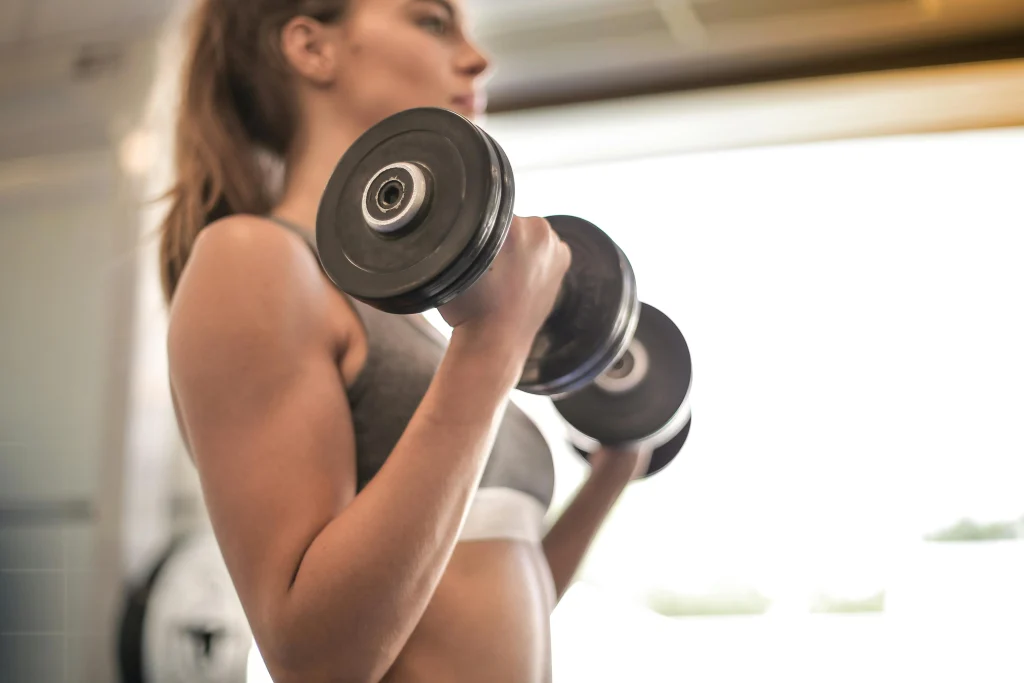
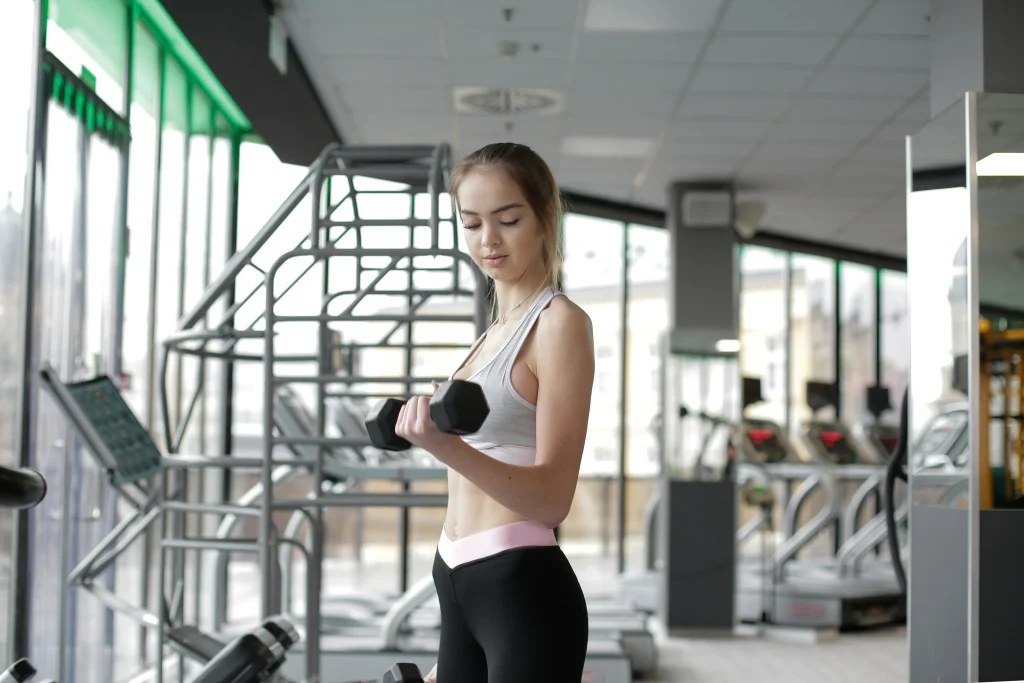
Dumbbells are small, handheld weights that come in various sizes. They are often used for exercises such as bicep curls, shoulder presses, and chest flies. Adjustable dumbbells allow you to change the weight depending on the exercise, making them a versatile option for home gyms.
Barbells
Barbells are long bars with weights attached at either end. They are commonly used for exercises like squats, deadlifts, and bench presses. Barbells are ideal for those looking to lift heavier weights and build maximum strength.
Kettlebells
Kettlebells are rounded weights with a handle, typically used for dynamic exercises like swings, cleans, and snatches. They help develop explosive power, agility, and strength while also engaging the core muscles.
Weight Plates
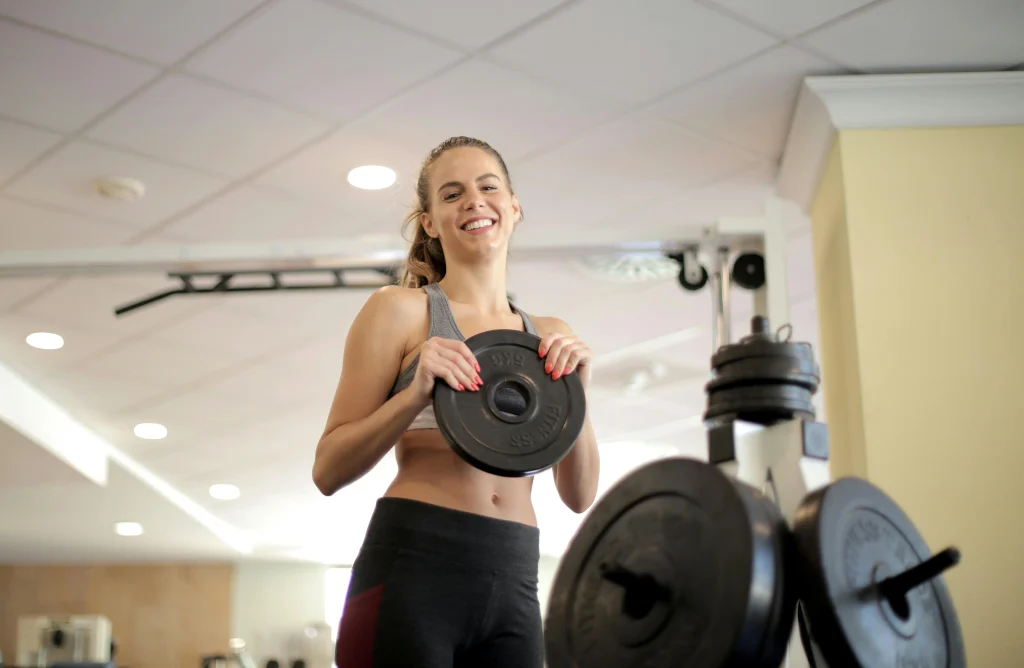
Weight plates are individual discs that can be loaded onto barbells or other equipment. These plates come in a variety of sizes, making them ideal for customizing the weight load based on your strength level.
Free Weights vs. Machines: Which is Better?
The debate between free weights and machines is a common one in the fitness community. While both types of equipment have their advantages, free weights are generally considered more beneficial for several reasons:
- Functional Fitness
Free weights better simulate real-life movements and help improve functional fitness. This translates to better performance in everyday activities and sports. - Stability and Coordination
Free weights require more stability and coordination, which helps improve your balance and posture. In contrast, machines often isolate muscles, which limits overall functional improvement. - Greater Range of Motion
Free weights allow a greater range of motion, which can lead to more effective muscle activation. Machines, on the other hand, may restrict movement and prevent full muscle engagement.
Who Can Use Free Weights?
Free weights are suitable for nearly anyone, from beginners to experienced lifters. If you’re new to strength training, it’s essential to start with lighter weights to ensure you can maintain proper form. As your experience and strength increase, you can gradually add weight to challenge your muscles further.
Experienced athletes often prefer free weights because they allow for more complex, compound exercises that are essential for strength development. Free weights can be used to target specific muscle groups or build overall strength and endurance.
Tips for Getting the Most Out of Your Free Weight Routine
- Warm Up Properly
Always warm up before lifting weights to prepare your muscles and joints for the workout. Perform dynamic stretches or light cardio to get your body ready. - Include Rest Periods
To prevent overtraining and muscle fatigue, include rest periods between sets. Typically, 30 seconds to 1 minute is sufficient, but this may vary depending on your fitness goals. - Balance Your Routine
Incorporate both upper and lower body exercises into your routine for a balanced workout. Ensure you’re targeting all major muscle groups throughout the week.
Conclusion
Incorporating free weights into your fitness routine is one of the best ways to improve strength, endurance, and muscle tone. Whether you’re looking to build muscle, increase functional strength, or boost overall fitness, free weights provide the versatility and efficiency needed to achieve your goals. With proper form, consistency, and gradual progression, free weights can help you reach new levels of fitness. You can also check this. Nike Gym Bag.
FAQs
1. Can I use free weights if I’m a beginner?
Yes, free weights are suitable for beginners. Start with lighter weights and focus on learning proper form before increasing the weight.
2. How do I know if I’m using free weights correctly?
Always ensure that your form is correct. If you’re unsure, consult a trainer or use a mirror to monitor your movements. Never compromise form for heavier weights.
3. How often should I use free weights in my workout routine?
Aim to incorporate free weights into your workout routine at least 2-3 times a week, focusing on different muscle groups each session.
4. Are free weights better than machines for building muscle?
Free weights tend to be better for overall muscle development since they engage multiple muscle groups and require more stabilization. Machines can isolate muscles but are less effective for functional strength.
5. Do I need to warm up before using free weights?
Yes, warming up is crucial to prepare your muscles and joints for the intensity of weightlifting. Light cardio or dynamic stretches are excellent ways to warm up.
6. How can I store my free weights?
Invest in a weight rack to organize your dumbbells and weight plates. This helps keep your workout area tidy and reduces the risk of injury.
7. Can free weights help with weight loss?
Yes, free weights can help with weight loss by increasing muscle mass and boosting metabolism. Combined with a healthy diet, strength training with free weights is an excellent way to burn fat and build lean muscle.